SEOcial Media Solutions
Published on March 6, 2026
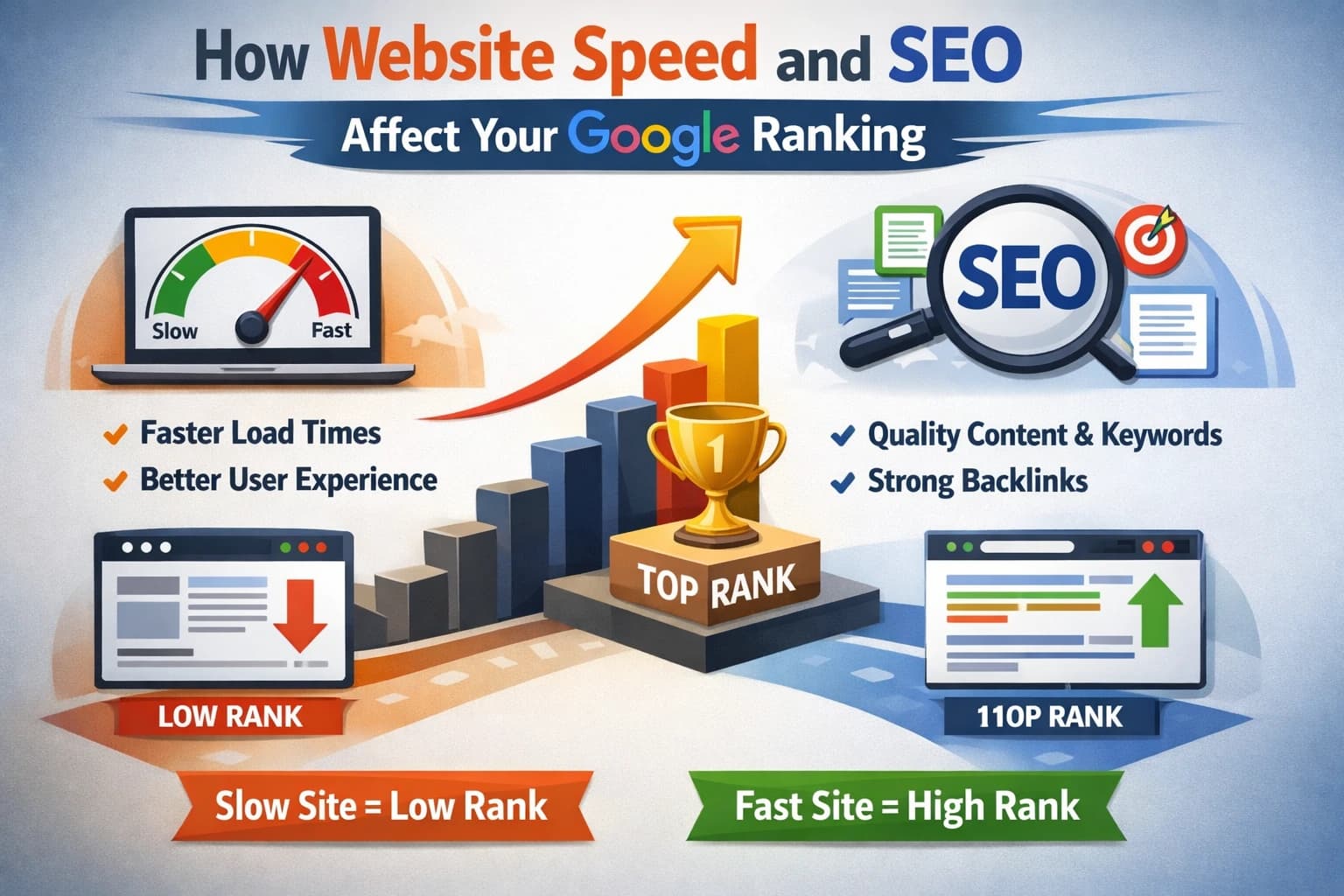
How Website Speed and SEO Affect Your Google Ranking
In today’s digital world, having a website is not enough. If your website loads slowly, visitors may leave before even seeing your content. Website speed has become one of the most important factors that affect user experience and search engine rankings.
Search engines like Google aim to provide the best possible experience to users. Because of this, they prioritize websites that load quickly and provide smooth navigation. A slow website can negatively affect both SEO performance and user engagement.
In this blog, we will explain how website speed impacts SEO, why it matters for Google ranking, and what steps you can take to improve your website performance.
What Is Website Speed?
Website speed refers to how quickly a web page loads and becomes fully usable for visitors. It includes several factors such as:
- Server response time
- Page loading time
- Image loading speed
- Script and code performance
Ideally, a website should load within 2–3 seconds. If a website takes longer than that, users may lose patience and leave the page.
Why Website Speed Matters for SEO
Search engines evaluate many factors while ranking websites in search results. Website speed is one of those important ranking signals.
In 2010, Google officially announced that page speed is a ranking factor. Later, with the introduction of Core Web Vitals, speed and user experience became even more critical for SEO.
Fast websites provide a better user experience, which helps improve engagement and search engine rankings.
Impact of Slow Website Speed on SEO
A slow website can harm your SEO in several ways.
Higher Bounce Rate
Bounce rate refers to the percentage of visitors who leave your website without interacting with it.
If a website takes too long to load, users often leave immediately. A high bounce rate signals to search engines that your website may not be providing a good experience.
Lower Search Rankings
Search engines aim to show users the most relevant and fast-loading websites. If your website loads slowly compared to competitors, it may rank lower in search results.
This means fewer visitors and less organic traffic.
Poor User Experience
User experience is one of the key factors that search engines evaluate. A slow website creates frustration for users and reduces the chances that they will stay on your website or explore other pages.
Websites that provide a smooth and fast browsing experience are more likely to rank higher.
Reduced Conversion Rates
Website speed does not only affect rankings—it also impacts conversions.
Studies show that even a one-second delay in page loading time can significantly reduce conversions. For businesses that rely on leads or online sales, this can result in lost opportunities.
What Are Core Web Vitals?
To measure user experience more accurately, Google introduced Core Web Vitals.
These metrics evaluate how quickly and smoothly a webpage loads.
Largest Contentful Paint (LCP)
LCP measures how long it takes for the largest visible content element to load.
A good LCP score should be under 2.5 seconds.
First Input Delay (FID)
FID measures how quickly a website responds when a user interacts with it, such as clicking a button or link.
Fast interaction improves user satisfaction.
Cumulative Layout Shift (CLS)
CLS measures visual stability. It checks whether elements on the page shift unexpectedly while loading.
Stable pages provide a better browsing experience.
Common Reasons Why Websites Load Slowly
Several factors can slow down website performance.
- Large Image Files: Images that are not optimized can significantly increase page load time.
- Too Many Plugins: Using too many plugins or poorly coded plugins can slow down website performance.
- Poor Hosting: Low-quality web hosting can affect server response time and overall website speed.
- Unoptimized Code: Heavy scripts, unnecessary CSS, and large JavaScript files can delay page loading.
- Lack of Caching: Without caching, browsers must reload all website elements every time a user visits a page.
How to Improve Website Speed
Improving website speed can significantly enhance SEO performance and user experience.
Here are some practical steps to optimize your website.
- Optimize Images: Compress images without reducing their quality. Using modern formats such as WebP can help reduce file sizes and improve loading speed.
- Use Reliable Web Hosting: Choosing a fast and reliable hosting provider is crucial for website performance. High-quality hosting ensures faster server response times and better stability.
- Enable Browser Caching: Caching allows browsers to store certain elements of your website so that they load faster for returning visitors. This reduces the amount of data that needs to be downloaded each time.
- Minify CSS, HTML, and JavaScript: Removing unnecessary spaces, comments, and unused code can reduce file sizes and improve page speed.
- Use a Content Delivery Network (CDN): A CDN stores copies of your website on multiple servers worldwide. When users visit your website, the content is delivered from the server closest to their location, improving loading speed.
- Reduce Redirects: Too many redirects increase loading time and affect website performance. Try to keep your website structure simple and optimized.
Tools to Test Website Speed
Several tools can help you analyze website speed and performance. Some popular tools include:
- Google PageSpeed Insights
- GTmetrix
- Pingdom Website Speed Test
These tools provide detailed reports and recommendations for improving website performance.
Benefits of a Fast Website
Improving website speed provides several benefits for both SEO and user experience.
- Better Search Rankings: Fast websites are more likely to rank higher in search results.
- Improved User Experience: Visitors prefer websites that load quickly and are easy to navigate.
- Higher Conversion Rates: A faster website encourages visitors to stay longer and take action.
- Increased Organic Traffic: Better rankings and improved user engagement lead to more organic traffic over time.
Final Thoughts
Website speed is no longer just a technical factor—it is a crucial part of modern SEO strategy. Search engines prioritize websites that deliver fast, smooth, and user-friendly experiences.
By optimizing images, improving hosting quality, minimizing code, and monitoring performance using tools like Google PageSpeed Insights, businesses can significantly improve their website speed.
A faster website not only improves rankings on Google but also enhances user experience, increases conversions, and drives more traffic.